
The government in December had announced incentives for exporters that include extension of two per cent interest subsidy for an additional one year ending March, 2014.

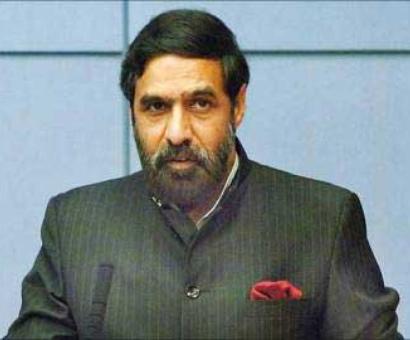
India's trade minister Anand Sharma said on Sunday that the government would come up with a comprehensive foreign trade policy in August.

India will unveil its much-awaited new Foreign Trade Policy 2023-28 on Friday, with a view to boost exports amid slowing global trade. Commerce and Industry Minister Piyush Goyal will announce the foreign trade policy, according to the ministry. The current foreign trade policy (2015-20) is in force till March 31, 2022.

The government has decided to postpone the release of the new Foreign Trade Policy (FTP) and extend the existing one by six months on account of global uncertainties and currency fluctuations. The government was scheduled to announce the new FTP by the end of September. The current policy was to end on September 30.

The government on Wednesday extended the existing foreign trade policy (FTP) for six more months up to September 30 this year due to the Covid-19 pandemic, according to a notification. FTP provides guidelines for enhancing exports to push economic growth and create jobs. On March 31, 2020, the government had extended the Foreign Trade Policy 2015-20 for one year till March 31, 2021, amid the coronavirus outbreak and the lockdown.
The supplement is scheduled to be released in the first half of April this year. Exporters were disappointed with Budget 2008-09 as it does not propose any specific measures to help them tide over the situation. In the April-January period of 2007-08, exports stood at $124.19 billion, an increase of 21.62 per cent from $102.12 billion during the year-ago period.

Amid rupee's free fall and slowdown in western markets, the government is likely to announce incentives in the foreign trade policy (FTP), scheduled for June 5, to boost exports.
The government will announce the annual Foreign Trade Policy on April 8, which will aim at giving a boost to exports of pharmaceutical, auto components and services.
Following are the highlights of the Annual Supplement 2006 to the Foreign Trade Policy unveiled by Commerce and Industry Minister Kamal Nath on Friday
The policy aims at developing export potential, improving export performance, boosting foreign trade and earning valuable foreign exchange.
With India's exports touching $80 billion in 2004-05, government on Friday announced a slew of measures in the new Foreign Trade Policy, aimed at taking the exports to $92 billion in the current fiscal.
Commerce Minister Kamal Nath on Monday ruled out any differences with the finance ministry on certain provisions of the Foreign Trade Policy and said the Policy will be announced before April 10.

The United States and the European Union have strongly criticised India's trade policies at the World Trade Organization review, highlighting concerns over high tariffs, quality-control orders (QCOs), and restrictions on digital trade and services, which they argue undermine India's economic openness.
The new Foreign Trade Policy, to be unveiled on April 7, would focus mainly on attracting foreign direct investment and generating employment for the youth.
The government will announce a new foreign trade policy next month aimed at boosting exports especially from agriculture sector.
India will on Friday unveil its Foreign Trade Policy, which is likely to give a new thrust to toys, leather, textiles, stationery, sports goods and processed food exports.
The government may roll out a new foreign trade policy (FTP) of a shorter term of two-three years in a bid to keep pace with the fast-evolving scenarios in international trade which have been triggered by recent disruptions, such as the pandemic and the Russia-Ukraine war. An FTP is an elaborate policy guideline and strategy to promote the export of goods and services, with a duration of five years usually. The existing policy came into force on April 1, 2015, and was valid for five years, before multiple extensions.
The government on Friday came out with Foreign Trade Policy (FTP) 2023 which seeks to boost the country's exports to $2 trillion by 2030 by shifting from incentives to remission and entitlement based regime. Unlike the practice of announcing 5-year FTP, the latest policy has no end date and will be updated as and when needed, said Director General of Foreign Trade (DGFT) Santosh Sarangi while briefing media about FTP 2023. Earlier, Commerce and Industry Minister Piyush Goyal unveiled FTP 2023 which will come into effect from April 1, 2023.
): Tea exporters in Siliguri in West Bengal are upbeat thanks to the new provision bringing the tea industry under the Vishesh Krishi Upaj Yojana in the new foreign trade policy.
With India's exports all set to touch $80 billion in 2004-05, the new Foreign Trade Policy to be unveiled on Friday will have a slew of measures to boost farm exports apart from traditional sectors like textiles, gems and jewellery.

New foreign trade policy to stress manufacturing exports.

India has removed a key regulatory hurdle, allowing exporters to receive payments in Indian currency while retaining incentives under the country's foreign trade policy, a move aimed at promoting wider use of the rupee in international trade.
Commerce and Industry Minister Piyush Goyal on Monday said the existing foreign trade policy (FTP) will be extended for six months till March 31 next year. The government had earlier extended the FTP 2015-20 until September 30 this year due to the Covid-19 crisis. The FTP provides guidelines for enhancing exports to push economic growth and create jobs.

The Finance Ministry has dismissed allegations of US pressure influencing the 0.4% Merchant Discount Rate (MDR) on select UPI transactions. It clarified that NPCI guidelines prioritise RuPay credit cards on UPI and do not favour international cards. The ministry also asserted that the MDR, applicable to person-to-merchant transactions above Rs 2,000, is unlikely to increase cash transactions or cause inflation, with measures in place to prevent burdening consumers.
The much-delayed Foreign Trade Policy (FTP), which will roll out steps to boost exports, is expected to be unveiled soon.

The five-year Foreign Trade Policy, to be unveiled on August 27, is expected to give incentives to Indian exporters to widen their global markets beyond the United States, the European Union and Japan in the face of the economic crisis in these key destinations.

Indian benchmark indices, Sensex and Nifty, saw an early rebound after significant losses, driven by value buying, though elevated oil prices and anticipation of the US Federal Reserve's policy decision tempered gains. Track Sensex, Nifty on September 16.

A think tank, GTRI, has urged India to resist US pressure regarding its UPI policies, advocating for the defence of competition, policy autonomy, and the long-term sustainability of its payments ecosystem. This comes as the Lok Sabha passed a bill allowing charges on UPI transactions, a move GTRI suggests should not be influenced by foreign trade complaints.

A think tank, GTRI, has urged India to resist US pressure regarding its UPI policies, advocating for competition, policy autonomy, and a sustainable payments ecosystem. This comes as the Lok Sabha passed a bill allowing charges on UPI, and the US has criticised India's digital payment systems, raising concerns about the future of India's digital payment landscape.

The Indian government has permitted Foreign Direct Investment (FDI) in an inventory-based e-commerce model exclusively for the export of domestically manufactured or produced goods, aiming to boost outbound shipments without affecting small local retailers.

Indian benchmark indices, Sensex and Nifty, traded flat in early deals due to elevated crude oil prices exceeding USD 100 per barrel and persistent geopolitical tensions, which subdued investor risk appetite.

The United States has implemented a 10 per cent tariff on goods imported from India and 16 other countries, citing efforts to combat forced labour in production.

A coalition of 25 Democratic-ruled US states has filed a lawsuit against the Trump administration's decision to impose new tariffs on 60 economies, including India. The states contend that these tariffs, ostensibly aimed at combating forced labour, are illegal taxes that will raise costs for consumers and businesses, and were implemented without proper legal justification.

India is actively integrating payment system harmonisation into its Free Trade Agreement (FTA) negotiations, especially with countries hosting a large Indian diaspora. This strategy aims to leverage India's growing fintech ecosystem, facilitate cross-border financial services, and position India as a global hub for financial services exports, particularly through platforms like GIFT City.

The Finance Ministry has refuted allegations that US pressure influenced the decision to levy a 0.4% Merchant Discount Rate (MDR) on select UPI payments. It clarified that NPCI guidelines prioritise RuPay credit cards on UPI to foster a domestic payment ecosystem and that the MDR introduction aims to create a sustainable revenue model for smaller domestic companies, thereby protecting India's sovereignty in digital payments.
A Parliamentary Standing Committee on Commerce has urged the Indian government to swiftly conclude the proposed India-US Bilateral Trade Agreement (BTA), while ensuring India's interests are protected, recommending complete exemption for key export products like generic medicines and smartphones from future US tariff increases.
The Finance Ministry has refuted allegations that US pressure influenced the decision to levy a 0.4 per cent Merchant Discount Rate (MDR) on select UPI payments. The ministry clarified that the NPCI guidelines prioritise RuPay credit cards on UPI to promote domestic alternatives and ensure a self-sustaining revenue model for smaller domestic companies, countering claims of favouring foreign payment providers.

Indian benchmark indices, Sensex and Nifty, traded marginally higher in early trade despite the US Federal Reserve's recent rate hike and indications of further tightening, with the National Stock Exchange's much-anticipated Rs 22,569-crore IPO also opening for subscription.

Farmers under the Samyukta Kisan Morcha have initiated a week-long protest at the Chandigarh-Mohali border, demanding a minimum support price (MSP) based on the C2 plus 50 per cent formula, debt waivers, and opposing the proposed India-US trade deal, Electricity Amendment Bill, and Seed Bill. They also raised concerns about water depletion and sought resolutions based on riparian principles.
